Why Administrative Offices Have Become a High Growth Investment
Administrative offices have become an attractive option for investors exploring Egypt’s evolving commercial real estate market. As businesses seek professional workspaces in well-planned districts, demand for modern offices is creating new opportunities for property buyers looking to generate rental income and benefit from potential long-term appreciation.
The expansion of business hubs, improved infrastructure, and the development of new urban communities have encouraged investors to look beyond traditional residential properties. However, a successful administrative office investment depends on more than purchasing a unit in a promising district. Location, building facilities, tenant demand, and purchase costs all influence a property's potential performance.
The Rising Demand for Modern Office Spaces
Businesses increasingly look for office environments that support productivity, accessibility, and a professional image. Modern administrative buildings can meet these needs through functional layouts, reliable facilities, parking, and convenient access to major roads.
For investors, these requirements create several factors to consider when evaluating office properties:
- Flexible layouts: Spaces that accommodate different business sizes and working arrangements.
- Professional facilities: Modern infrastructure, elevators, security, and reliable building management.
- Convenient access: Locations that employees, clients, and business partners can reach easily.
- Efficient space planning: Practical layouts that make units suitable for a wider range of tenants.
The most attractive offices are not necessarily the most expensive. Properties that balance functionality, accessibility, and competitive pricing may appeal to businesses seeking suitable premises without unnecessary costs.
Business Districts Driving Office Investments
Location remains one of the strongest influences on administrative property performance. Business districts can attract companies seeking proximity to other offices, service providers, government institutions, and commercial destinations.
Egypt’s New Administrative Capital has emerged as an area for investors to explore, with dedicated districts and developments designed to accommodate administrative and commercial activities. Nevertheless, investment potential varies between locations and individual projects, making detailed research essential.
Radix Development offers examples of administrative investment opportunities in this market:
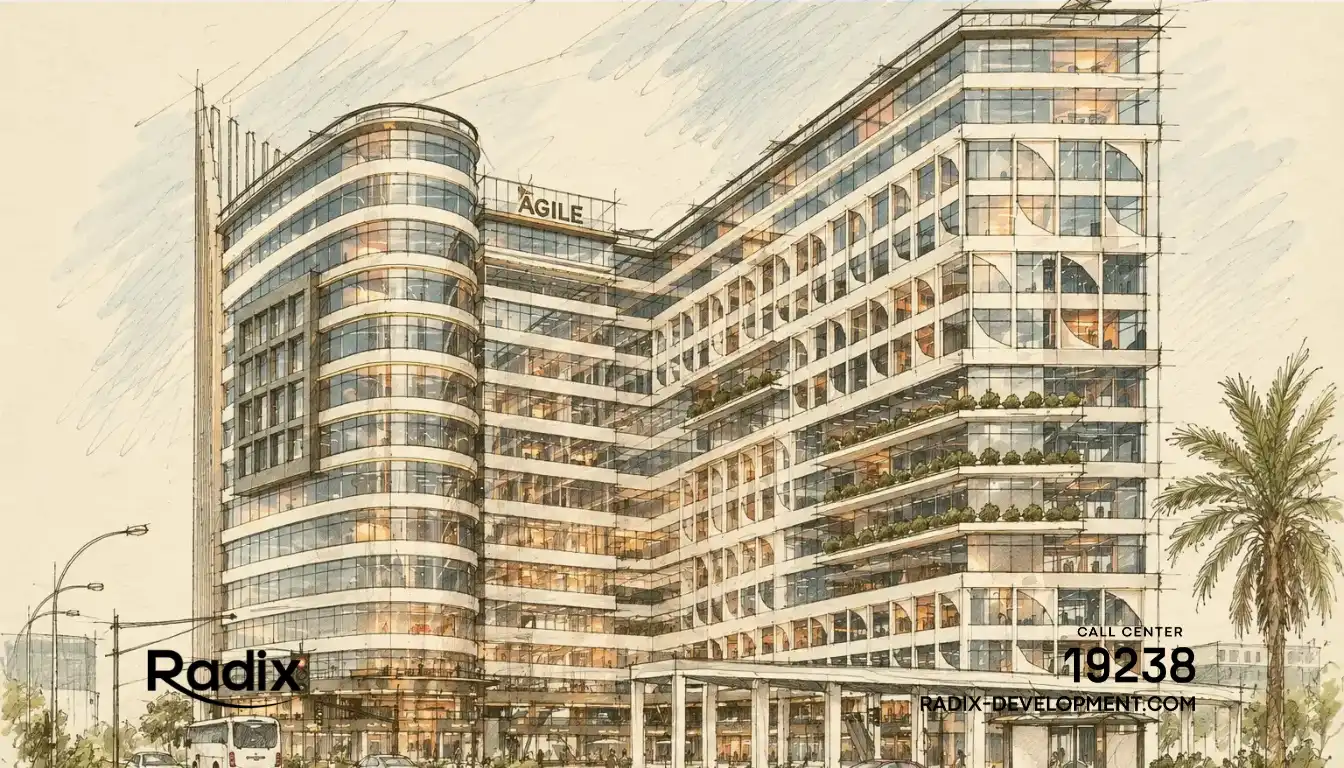
- Agile Business Complex: Located in the Downtown district of the New Administrative Capital, the project provides an example of a commercial development targeting business activity.
- Spinner New Capital: Located in the MU23 area, the development covers approximately 20,000 square meters and includes administrative and commercial units.
When comparing these projects, investors should assess accessibility, nearby developments, competing office supply, and evidence of business demand rather than relying on location names alone.
Features That Increase Office Property Value
An administrative office's value depends on how effectively it meets business requirements and competes with alternative spaces. Attractive design can help, but practical features and ongoing management are equally important.
Investors should evaluate the following characteristics:
- Building quality: Construction standards, maintenance arrangements, and the reliability of essential systems.
- Accessibility: Proximity to main roads, transportation options, and convenient parking.
- Unit configuration: Layout, floor area, natural lighting, and the ability to accommodate different businesses.
- Shared facilities: Security, reception areas, elevators, and professionally maintained common spaces.
- Developer reputation: Delivery history, contractual transparency, and the quality of completed projects.
Units with practical layouts and well-maintained facilities may appeal to more potential tenants. However, these advantages must be weighed against purchase prices, service charges, and competing properties in the same district.
Rental Income Opportunities for Office Owners
Administrative offices can provide recurring rental income when they attract suitable tenants and maintain competitive leasing terms. Potential tenants include consulting firms, technology companies, agencies, financial service providers, and other professional businesses.
Actual returns depend on occupancy, rental prices, expenses, and the length of vacancy periods. Investors should therefore evaluate net income rather than focusing exclusively on advertised rents.
Before purchasing, consider:
- Comparable rental rates: Research similar offices in the same district and building category.
- Potential tenant demand: Identify the businesses most likely to need the unit.
- Operating costs: Include maintenance, management fees, service charges, and repairs.
- Vacancy risk: Allow for periods when the office may not generate income.
- Lease flexibility: Understand the terms that may influence tenant retention and future rental adjustments.
A realistic rental forecast helps investors determine whether an office aligns with their income expectations and financial commitments.
Choosing the Right Administrative Project
Selecting an administrative project requires a comparison of both the property and the investment structure. A convenient payment plan may improve affordability, but it does not automatically make a unit a strong investment.
Investors should examine:
- Location and accessibility: Is the project positioned to serve businesses effectively?
- Unit specifications: Does the size and layout match likely tenant requirements?
- Total acquisition cost: What is the complete financial commitment, including additional fees?
- Construction and delivery: Are project progress and delivery terms clearly documented?
- Market competition: Are comparable offices available at more attractive prices or rental terms?
- Legal documentation: Are ownership arrangements, permits, and contractual obligations clear?
For example, comparing administrative units in Agile Business Complex and Spinner New Capital can help buyers assess different business districts and property options. The decision should be based on the specific unit's features, pricing, delivery conditions, and likely tenant market.
Building Long Term Returns Through Office Investments
Long-term office investment requires a strategy that balances income potential with manageable costs and market risks. Investors should avoid assuming that every new business district will experience immediate demand or consistent property appreciation.
A disciplined approach includes:
- Researching market trends: Monitor office supply, rental rates, and business activity in the chosen location.
- Prioritizing tenant suitability: Select units that match identifiable business requirements.
- Managing expenses: Account for maintenance, service charges, and periods without tenants.
- Reviewing the investment horizon: Ensure the expected holding period matches financial objectives.
- Comparing opportunities: Evaluate multiple projects before committing capital.
By assessing these factors, investors can compare administrative office opportunities in Egypt more effectively and identify properties that align with their budgets, leasing strategies, and long-term investment plans.