The Complete Guide to Commercial Real Estate Investment in Egypt
Egypt’s commercial real estate market is creating new opportunities for investors looking to expand their portfolios, generate rental income, and benefit from the growth of emerging business districts. From retail units in high-traffic locations to administrative offices in modern business complexes, commercial properties offer different investment possibilities depending on location, budget, and market demand.
The New Administrative Capital is among the destinations attracting attention, with developments designed to accommodate businesses, retailers, and service providers. Yet choosing the right property requires more than identifying a promising project. Investors need to understand what drives property value, which commercial assets suit their objectives, and how to assess potential returns before making a commitment.
Why Commercial Real Estate Continues to Attract Serious Investors
Commercial real estate attracts investors because it can combine recurring rental income with the potential for long-term capital appreciation. Businesses need suitable locations to operate, serve customers, and establish professional environments, creating demand for different types of commercial spaces.
Several factors make commercial property worth considering:
- Rental income potential: Leasing units to businesses can create recurring revenue, depending on occupancy and rental terms.
- Long-term value growth: Properties in developing business districts may appreciate as infrastructure and commercial activity expand.
- Investment flexibility: Investors can choose between retail units, administrative offices, and other commercial formats.
- Portfolio diversification: Commercial assets can complement other investments and spread exposure across different property categories.
For investors exploring commercial real estate investment in Egypt, the opportunity lies in identifying locations where business demand can support sustainable occupancy rather than relying on future development alone.
The Commercial Property Types That Generate Sustainable Returns
Not all commercial properties perform in the same way. Each category attracts different tenants, serves specific business needs, and comes with its own operating costs and vacancy risks.
Retail units can appeal to investors seeking tenants such as shops, cafés, restaurants, and service providers. Visibility, accessibility, pedestrian movement, and the surrounding population can strongly influence their performance.
Administrative offices target companies, entrepreneurs, and professional service providers. Their attractiveness often depends on location, building facilities, parking, accessibility, and the availability of suitable business infrastructure.
Mixed-use and integrated commercial developments bring together different activities within a planned environment, potentially attracting multiple customer groups throughout the day.
Radix Development offers examples of commercial formats in the New Administrative Capital:
- Spinner New Capital: Located in the MU23 area, the development covers approximately 20,000 square meters and includes commercial and administrative units.
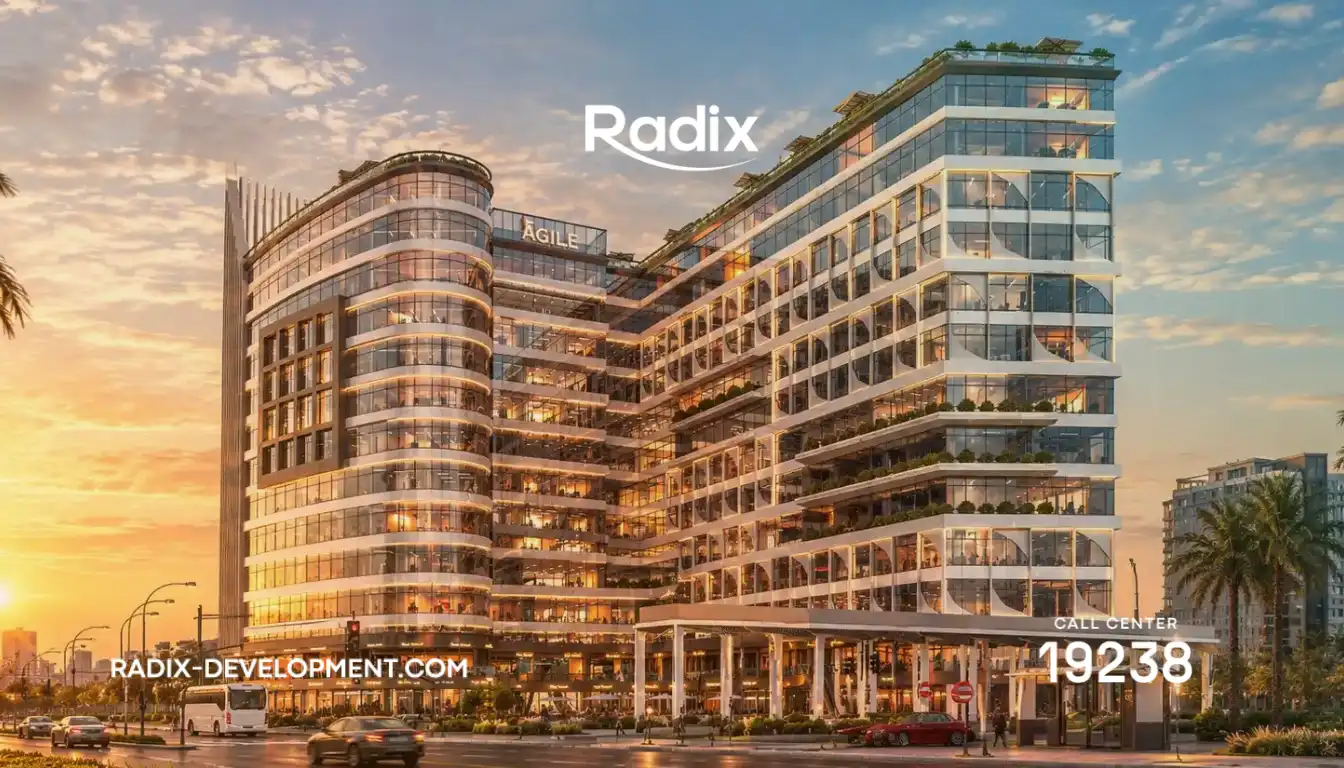
- Agile Business Complex: Located in the Downtown district, the project represents a commercial destination for businesses seeking space in the New Administrative Capital.
These examples help illustrate how investors can compare projects according to property type, location, unit size, and the businesses they are designed to accommodate.
The Factors That Increase Commercial Property Value
A property's value depends on more than its purchase price. Investors should examine the factors that influence its ability to attract tenants, maintain occupancy, and compete with nearby developments.
The most important considerations include:
- Strategic location: Proximity to residential communities, business districts, and major roads can improve accessibility.
- Commercial activity: A location with genuine business demand may offer stronger leasing prospects than an area relying primarily on future growth.
- Building quality: Functional layouts, modern facilities, parking, and reliable maintenance can make a unit more attractive.
- Developer credibility: Delivery history, construction quality, and transparent contractual terms deserve careful review.
- Unit suitability: Size, visibility, floor level, and layout should match the needs of potential tenants.
For example, a retail unit in a developing district may benefit from surrounding residential and commercial growth. However, investors should evaluate current occupancy, competing projects, and the pace of infrastructure development before assuming that property values or rental income will increase.
How to Choose the Right Commercial Investment Opportunity
Selecting a commercial property starts with understanding the investment goal. An investor seeking rental income may prioritize tenant demand and leasing potential, while someone focused on long-term appreciation may examine infrastructure plans and the wider development of the area.
Before purchasing, investors should compare:
- Purchase price: Is the price competitive relative to comparable properties?
- Payment plan: Do installments align with the investor’s available capital and financial commitments?
- Rental prospects: Which businesses are likely to lease the unit, and what evidence supports that demand?
- Additional costs: What are the maintenance fees, service charges, taxes, and operating expenses?
- Legal documentation: Are ownership, permits, contractual obligations, and delivery terms clearly documented?
- Resale potential: How easily could the unit be sold if the investor's plans change?
When comparing projects such as Spinner New Capital and Agile Business Complex, buyers should assess each unit individually rather than choosing based solely on the development's name or marketing claims.
The Risks Every Commercial Property Investor Should Understand
Commercial property can offer attractive opportunities, but returns are never guaranteed. Investors who overlook operating expenses, tenant demand, or market conditions may find that their actual performance differs significantly from initial expectations.
Key risks include:
- Vacancy risk: Units may remain unoccupied for extended periods, reducing rental income.
- Construction delays: Late delivery can postpone the start of leasing and affect financial plans.
- Market competition: New developments may increase supply and put pressure on rents.
- Unexpected expenses: Maintenance, management, and service charges can reduce net returns.
- Limited liquidity: Selling a commercial unit may take time, particularly when buyer demand is weak.
- Changing business needs: Tenants may close, relocate, or seek lower rental costs during economic uncertainty.
Investors should calculate expected returns after expenses, consider periods without rental income, and seek independent legal and financial advice before signing a contract.
Building a Profitable Commercial Real Estate Portfolio
Building a commercial property portfolio requires a clear strategy, careful research, and realistic financial expectations. Investors should avoid concentrating their capital in a single asset without considering how changes in demand, location, or operating costs could affect their overall position.
A more structured approach includes:
- Diversifying property types: Consider retail units and administrative offices according to budget and market demand.
- Evaluating different locations: Compare established commercial areas with emerging business districts.
- Researching tenant profiles: Understand which businesses are most likely to need the property.
- Calculating net returns: Account for vacancy, maintenance, management, and other ownership costs.
- Reviewing the developer: Examine project specifications, contractual terms, construction progress, and delivery commitments.
- Planning for the long term: Match each purchase to a defined investment horizon and an affordable financial commitment.
For those exploring commercial real estate investment in Egypt, projects such as Radix Development’s Spinner New Capital and Agile Business Complex provide examples to investigate when comparing commercial opportunities in the New Administrative Capital. The key is to evaluate the specific unit, its market position, and its financial potential before deciding whether it belongs in an investment portfolio.